

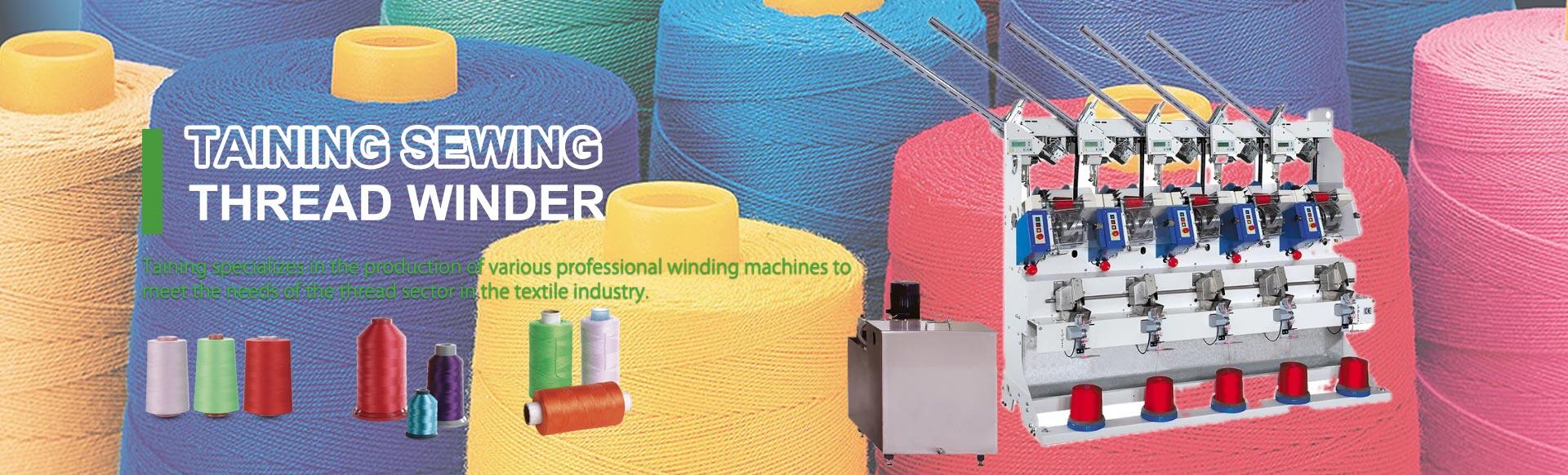
As production needs become more diverse, an Automatic Yarn Winding Machine can support different yarn materials, package requirements, and daily factory operation.
1. What Is an Automatic Yarn Winding Machine Used For?
An automatic yarn winding machine is used to rewind yarn into stable and organized packages for later textile processing. It can be used in applications such as sewing thread, weaving yarn, knitting yarn, embroidery thread, and other yarn-related production needs. The main purpose is to improve package formation, winding efficiency, and yarn handling.
Taining Machinery provides automatic winding solutions for manufacturers that need reliable operation and consistent winding quality. A well-designed automatic yarn winding machine can help factories reduce manual work, improve yarn package appearance, and support smoother unwinding in later production processes.
2. How Can an Automatic Yarn Winding Machine Help Textile Factories?
An automatic yarn winding machine helps textile factories improve production efficiency and winding consistency. In many textile processes, yarn must be prepared in the correct package shape before it can be used smoothly. Automatic winding can help control speed, tension, and package structure more consistently than manual operation.
Taining Machinery designs winding machines for factories that need dependable equipment for daily production. With stable winding performance, manufacturers can reduce yarn breakage, improve package quality, and make production management easier. Choosing the right automatic yarn winding machine can support better quality control and long-term factory efficiency.
3. Why Is Tension Control Important in an Automatic Yarn Winding Machine?
Tension control is very important in an automatic yarn winding machine because unstable tension can affect package density, yarn appearance, and unwinding performance. If the tension is too high, the yarn may be damaged or wound too tightly. If it is too low, the package may become loose or unstable.
Taining Machinery understands that different yarn materials require different winding conditions. A good automatic yarn winding machine should allow practical adjustment and stable control during production. Better tension control helps manufacturers produce more consistent yarn packages and reduce unnecessary production problems.
4. What Makes an Automatic Yarn Winding Machine Suitable for Different Yarn Materials?
An automatic yarn winding machine is suitable for different yarn materials when it offers flexible adjustment, stable yarn feeding, proper tension control, and compatible package settings. Textile factories often handle cotton, nylon, polyester, PP/PE, and other yarn materials, each with different characteristics.
Taining Machinery provides winding equipment designed for practical factory use and different production requirements. When a machine can be adjusted according to yarn type, tube size, and package shape, it becomes more useful for manufacturers with changing orders. A flexible automatic yarn winding machine can help factories improve production capability and reduce setup difficulty.
5. How Does an Automatic Yarn Winding Machine Improve Production Efficiency?
An automatic yarn winding machine improves production efficiency by reducing manual handling and supporting stable continuous winding. For factories with large production quantities, consistent machine operation can help save time, reduce labor needs, and improve package output.
Taining Machinery focuses on winding solutions that support reliable daily operation. With easier adjustment and stable performance, operators can manage production more effectively. A suitable automatic yarn winding machine can help manufacturers reduce downtime, improve package consistency, and make yarn preparation more efficient for downstream textile processes.